step 1
You found the curve.
Why I use it as my avatar
The answer is actually buried down ↓
A progress bar is a line. It fills from one end to the other: one number, somewhere between not-started and done.
So here’s a question I like: could a progress bar fill a whole surface instead of a thin strip? It sounds like a trick question (a line is thin, a square has area); I’ll come back to why it isn’t. First, an ordinary progress bar for a two-minute task:
And here, instead, we cover an area instead of a line:
To get a feel for it, grab the coloured slice below and drag it (or its edges). The highlighted part stays connected: nearby on the bar means nearby on the square. The reverse is not guaranteed, but this direction is already useful.
It comes from Cuneo
I grew up in Cuneo, a quiet town in the south-west corner of Piedmont, wedged between the rivers and the Maritime Alps (the kind of place you have to mean to visit). It’s also where Giuseppe Peano was born, in 1858, on a farmstead just outside town (the frazione that now carries his name, Tetto Galant).
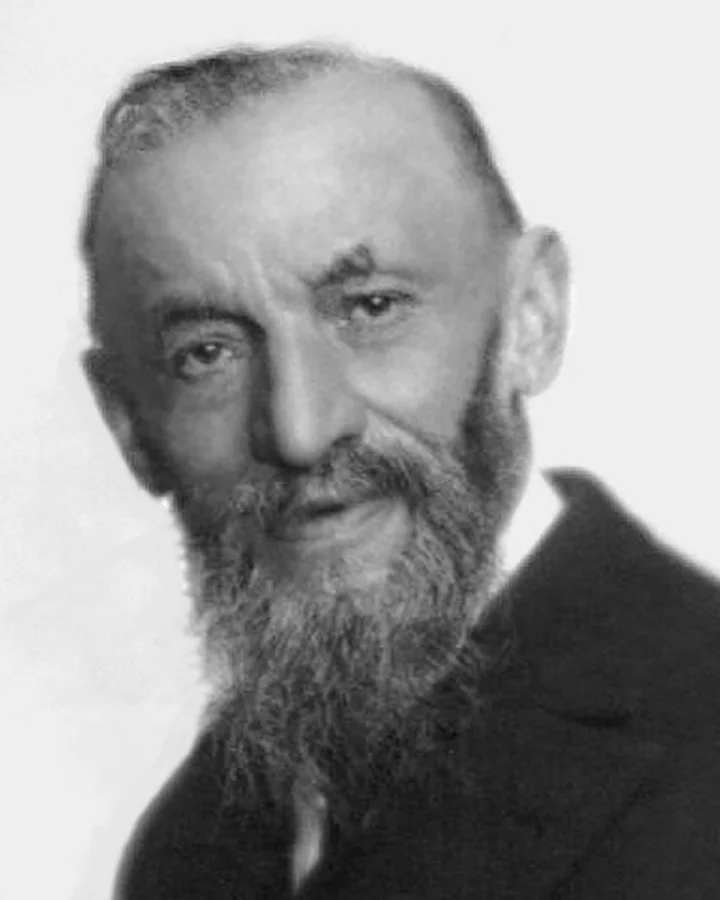
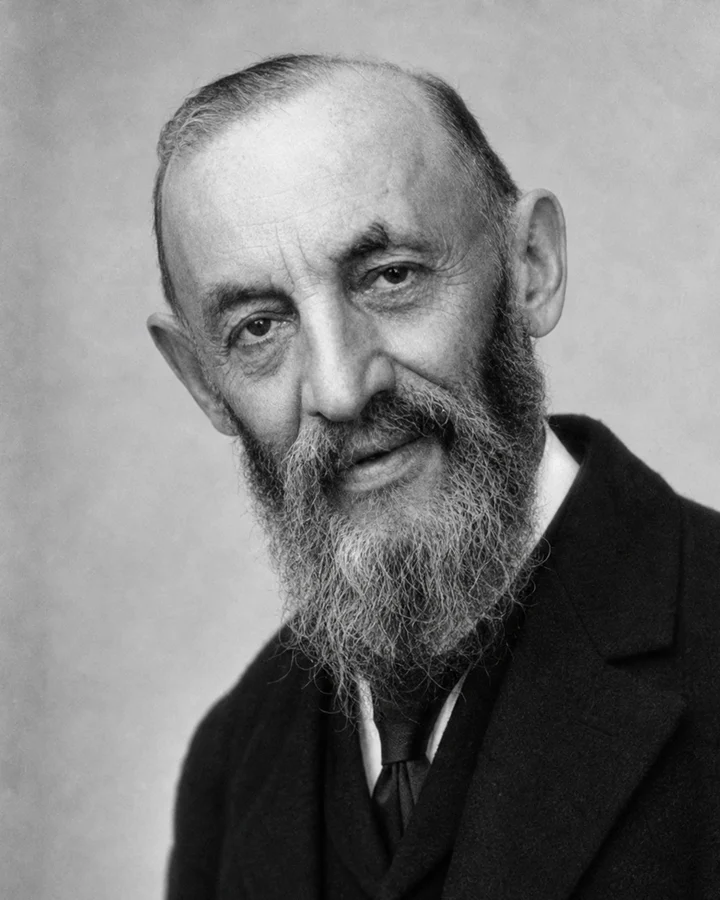
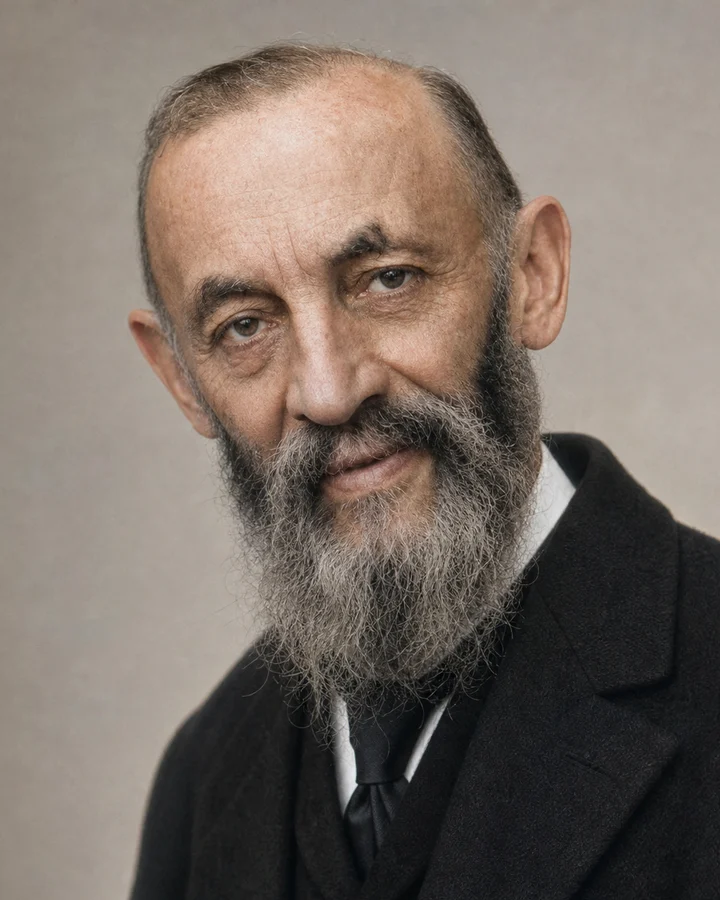
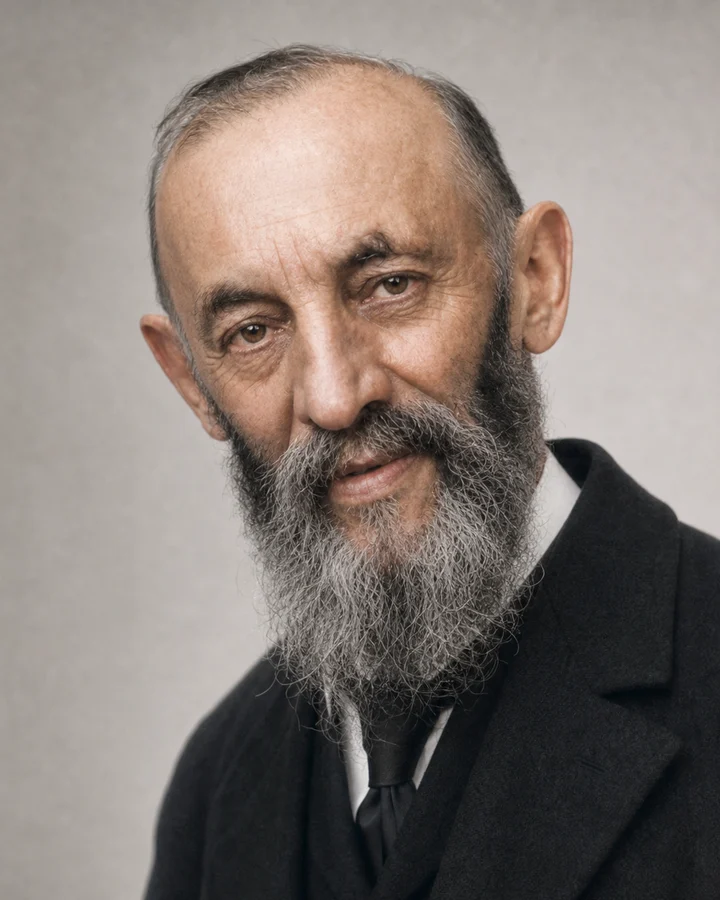
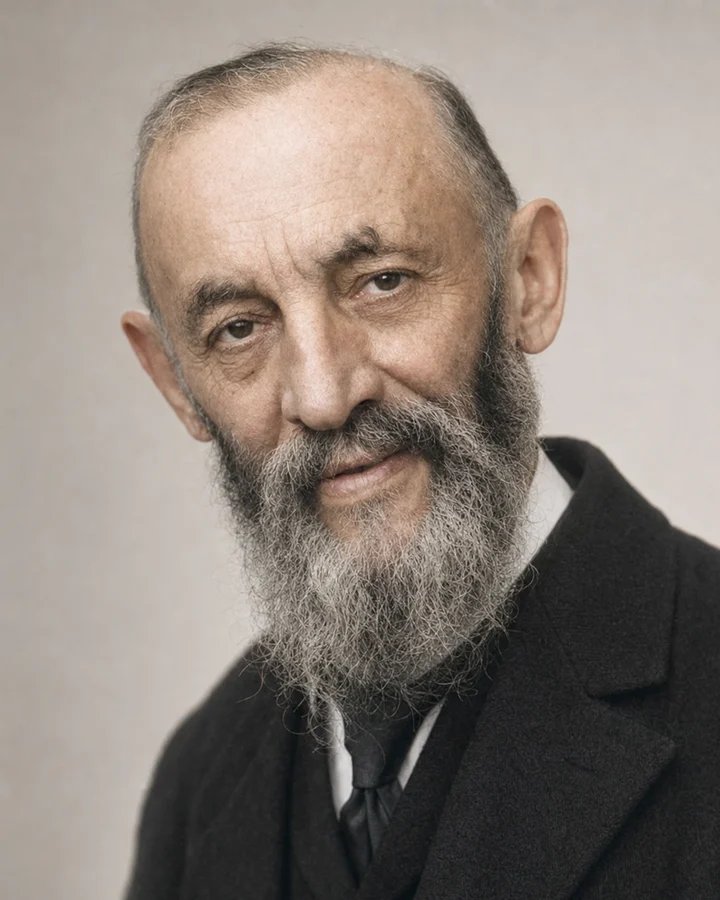
Peano is much less publicly famous than Hilbert, but his fingerprints are everywhere in mathematics. If you ever learned that all of arithmetic can be built from zero and a single operation (take the next number), that’s him. His five axioms are the bedrock under counting itself: a tiny set of rules that the whole of addition and multiplication follows from. He also gave us the symbols for is an element of (∈), union, and intersection that every student now meets without a second thought.
He was also working in a period when mathematicians were trying very hard to remove hand-waving from mathematics itself. Analysis had been made stricter. Set theory and symbolic logic were becoming tools. Hilbert would soon rebuild geometry from axioms. The dream was simple, and maybe too beautiful: write the rules clearly enough, and the rest should follow.
This was decades before Gödel showed that the dream could not quite work as hoped. But Peano was part of that earlier ambition: make the foundations precise enough that, when careful reasoning lands somewhere strange, you have to take the strangeness seriously.
This curve is a good example.
One dimension, pretending to be two
I promised I’d come back to why the progress bar question isn’t a trick. Here it is, as the problem Peano was circling in 1890. A line is one-dimensional: to say where you are on it, you need a single number (the distance from the start, exactly like the fraction a progress bar shows you). A square is two-dimensional: you need two numbers, an across and an up. They feel like different kinds of thing. So, the question: could you bend a single line so thoroughly that it passed through every single point of a square, with no gaps left behind? Could a one-dimensional thread (a progress bar, given enough time) completely fill a two-dimensional region?
Everyone’s intuition says no. A line is thin, a square has area, and you can’t make area out of something that has none. Peano proved that intuition wrong. He built, purely from formulas, a continuous curve that hits every point of the square (a space-filling curve). A year later, in 1891, David Hilbert found a version you can actually draw and follow, by watching it get built one step at a time. The line in my avatar is Hilbert’s: his clean, geometric take on Peano’s idea.
The catch is that the picture you can draw is never the real thing. It’s only a stage on the way. You build it by repetition: start with a simple shape, replace it with four shrunken, rotated copies of itself joined end to end, then do the same to each of those, and again. Every round, the line gets longer and reaches into finer territory:
step 2
step 3
step 4
The honest version is a limit: the real space-filling curve is what these drawings approach as you repeat the step without end. At every finite stage it’s still just a long, well-behaved line with zero area. Only in the limit does it manage to be everywhere at once. That gap (between “every stage is obviously a line” and “the limit fills a square”) is where I think the wonder lives.
One of the first fractals ever drawn
Look at the four steps again. Each one is made of smaller copies of the one before, rotated and shrunk: the whole contains the part, and the part echoes the whole. We have a word for that now (self-similarity, the defining trait of a fractal). But Peano was doing this in 1890, more than eighty years before Benoît Mandelbrot coined the word “fractal” in 1975 and made these shapes famous.
At the time, curves like this had no friendly name. They got called “pathological,” even monsters: objects that seemed to break the rules about what a curve was allowed to do. A line that fills space. A shape whose length grows without bound while its area stays put. Mathematicians of the era were genuinely unsettled (Poincaré called the whole genre a “gallery of monsters”). Only later did it become clear that the monsters weren’t bugs in mathematics, but a first glimpse of an entire hidden geometry. Peano’s curve sits right at the start of that lineage. I think it’s fair to call it one of the first fractals ever drawn, decades before anyone knew to call it that.
A thread with no width, folded so cleverly it becomes a surface. A line that is secretly a square. A shape from the 1890s that we only learned to name in the 1970s.
So, why my face
Because it’s cool.
Because it’s from home.
Because there is a lot you can unpack from this apparently simple figure: a progress bar folded into a square, a local mathematician inside a much larger story, a drawing that looks like a doodle and turns out to touch foundations, fractals, computation, and the limits of what “obvious” means.
Also it just looks good at 400 pixels wide. That helps.